
Roof Replacement & Storm Damage Repair in the North Metro
Full roof replacements across Oak Grove, Elk River, Buffalo, Maple Grove, Minnetonka and the surrounding area, completed by a licensed and insured contractor.
Hanson Variety Solutions handles full roof replacement and repair for homes throughout the North and West Metro — Oak Grove (where we're based), Andover, Anoka, Ramsey, Coon Rapids, Maple Grove, Elk River, Buffalo, Minnetonka, and the surrounding area. We use quality materials, follow local building standards, and stand behind the work with our license (MN Lic. #BC804858). We also handle the rebuild after storm or wind damage: documenting what we find, meeting with your insurance adjuster on scope, and completing the repair — we don't file, negotiate, or manage the claim itself.
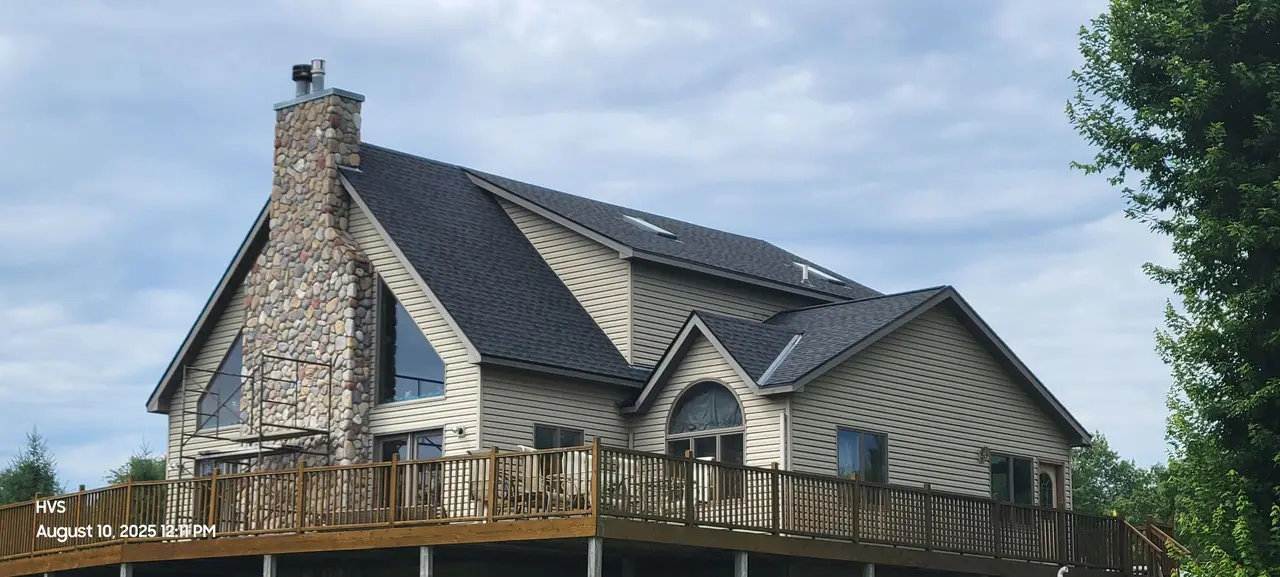
Our Roofing Replacement Services
Full Roof Replacement
Replace your entire roof with quality materials, ensuring durability and long-term protection.
Storm Damage Replacement
Rebuild roofs damaged by hail, wind, or storms, restoring your home's safety and appearance.
Tree Damage Roof Repair
Repair roof damage from fallen trees and branches, protecting your home from further exposure to wind, rain, and pests.
Just had a storm? See our step-by-step guide: Storm Damage: What to Do Next.
Signs your roof needs a closer look
Most roof problems don't announce themselves right away, which is exactly why they get expensive — a small issue left alone usually becomes a bigger one by the time it's obvious from inside the house. A few things worth checking from the ground with binoculars, or asking us to check for you:
Granule loss and balding shingles. Asphalt shingles shed some granules as they age, but noticeable bald patches — especially spread across multiple slopes rather than one spot — mean the shingle's UV protection is wearing thin and its remaining life is shorter than it looks.
Curling, cupping, or cracked shingle edges. Heat cycling and age make shingles lose flexibility. Once edges start curling up or cracking, they're more vulnerable to wind uplift in the next storm.
Missing or displaced shingles after wind. Even a few missing shingles expose the underlayment and deck to water. It's a repair worth addressing quickly rather than waiting for the next storm to make it worse.
Granules collecting in gutters. A heavier-than-usual amount of granule buildup in the gutters, especially after a hailstorm, is often the first visible sign of hail bruising on the shingles themselves.
Daylight or staining in the attic. If you can see daylight through the roof deck from inside the attic, or notice dark staining on the underside of the decking or rafters, water is already getting through somewhere.
Sagging rooflines. A roofline that dips rather than running straight usually points to a structural issue with the decking or framing underneath, not just a shingle problem — this one is worth a prompt inspection.
How we approach a replacement
Inspection first. We walk the roof (not just look at it from the ground) to check the shingles, flashing, vents, and — where accessible — the decking underneath. If there's storm damage, we document it with photos before anything gets torn off, since that documentation is what you and your adjuster will both be looking at.
Tear-off and deck check. Old shingles come off down to the deck, which gets inspected for soft spots or water damage the old roof was hiding. Any bad decking gets replaced before new material goes down — installing new shingles over a compromised deck just hides the problem for a few more years.
Underlayment and flashing. A synthetic or felt underlayment goes down as the roof's secondary water barrier, with ice-and-water shield at the eaves and valleys — the areas most exposed to Minnesota's freeze-thaw cycles and ice dams. Flashing around chimneys, vents, and roof-to-wall intersections gets replaced or resealed, since flashing failure is one of the most common sources of a roof leak that isn't actually a shingle problem.
Shingle installation. Shingles go down per the manufacturer's nailing pattern and exposure spec, with starter strip at the eaves and ridge cap at the hips and ridge — both of which matter more for wind resistance and water-shedding than people expect.
Ventilation check. We check that intake (soffit) and exhaust (ridge or roof) venting are balanced. Poor attic ventilation shortens shingle life from the underside and is one of the biggest contributors to ice dams in a Minnesota winter — see our ice dam prevention post below for more on that.
Cleanup and magnetic sweep. The yard gets a magnetic sweep for stray nails in addition to a general cleanup, since a full tear-off scatters more fasteners than most homeowners expect.
Materials we install
We install laminated/architectural asphalt shingles as our standard offering — a heavier, dimensional shingle than a basic 3-tab, with a longer manufacturer warranty and better wind rating, which matters in a region that sees regular high-wind events. Color and brand selection depends on what's available and what fits the home; we'll walk through options once we've measured your roof.
For a quick starting-point measurement before we ever get on a ladder, our Roof Estimate tool uses satellite imagery to estimate your roof's squares and pitch and show a price range by material — useful for budgeting, not a substitute for the field measurement and inspection we do before any contract.
Free roofing calculators (Cool Things)
If you're doing some of your own planning or just want to understand the math behind a roofing quote, these free tools run right in your browser:
Roofing Squares & Bundles — turn a footprint and pitch into squares, shingle bundles, starter, and ridge cap. Pitch Converter — move between x/12, degrees, and slope percent. Gutter & Downspout Sizing — figure out what gutter size and how many downspouts a roof actually needs. See the full set at Cool Things.